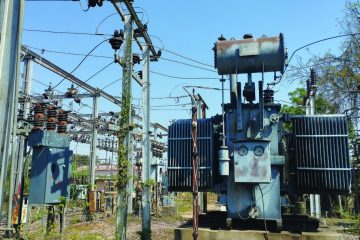
Power transformers sit at the heart of Nigeria’s electrical infrastructure – supporting industries, commercial facilities, estates, hospitals, and utility networks. Whether installed in substations, factories, or private power systems, transformers are designed to operate reliably for decades. However, when a transformer begins to make unusual or excessive noise, it is often the first warning sign that something is wrong.
At Just HardRich Global Resources Limited, the choicest Electrical Power and Control Engineering Company in Nigeria, we routinely emphasize one key truth to our clients: transformers speak before they fail. Knowing how to interpret those sounds can save millions of naira in repairs, downtime, and equipment replacement.
In this comprehensive guide, we explain why transformers make noise, what is normal, what is not, and how modern diagnostic tools and professional engineering support can help you address problems early – before they escalate into catastrophic failures.
Understanding Normal Transformer Noise: The Science of Magnetostriction
Before assuming a transformer is faulty, it is important to understand that some level of noise is normal.
The most common sound you hear from a healthy transformer is a steady low-frequency hum. This sound is primarily caused by a physical phenomenon known as magnetostriction.
What Is Magnetostriction?
When alternating current (AC) flows through a transformer’s windings, it creates a constantly changing magnetic field in the steel core. This magnetic field causes the steel laminations in the core to expand and contract slightly—twice during every AC cycle.
Even though these movements are microscopic, they occur rapidly and continuously. Over time, they create vibrations that transfer to the transformer tank and surrounding structures, producing the familiar humming sound.
In Nigeria’s 50 Hz power system, the fundamental hum is typically around 100 Hz, though additional harmonics may be present depending on load conditions and core construction.
When Normal Noise Becomes a Concern
A transformer’s hum should be:
- Consistent in tone
- Stable in volume
- Largely unaffected by minor load changes
If the sound suddenly becomes louder, sharper, irregular, or accompanied by buzzing, rattling, popping, or grinding, it is no longer normal. These changes often signal mechanical wear, electrical stress, or insulation deterioration.
This is where professional assessment from Just HardRich Global Resources Limited becomes critical.
Common Causes of Abnormal Transformer Noise
Abnormal transformer noise almost always points to an underlying mechanical or electrical issue. Identifying the source early allows for targeted maintenance rather than costly emergency repairs.
Below are the most common reasons transformers begin to make concerning noises.
1. Core Vibration and Loose Laminations
The transformer core is built from thin steel laminations tightly clamped together to minimize vibration. Over years of operation, constant magnetostriction places stress on:
- Core bolts
- Clamping structures
- Insulating spacers
What It Sounds Like
- Louder-than-usual humming
- Metallic rattling or knocking
- Vibrations that can be felt on the tank
Why It Happens
In Nigeria, frequent voltage fluctuations, unstable grid supply, and sudden load changes accelerate mechanical fatigue. Older transformers or those exposed to repeated fault conditions are especially vulnerable.
Practical Solutions
- Internal mechanical inspection
- Re-tightening or replacing core clamps
- Vibration dampening retrofits
At Just HardRich Global Resources Limited, we use vibration analysis and advanced inspection techniques to detect core looseness before it causes irreversible damage.
2. Winding Vibration and Mechanical Displacement
Transformer windings experience intense electromagnetic forces, especially during:
- Load surges
- Short-circuit events
- Switching operations
If winding supports weaken or shift, the windings can move excessively.
What It Sounds Like
- Deep buzzing that increases with load
- Irregular humming under heavy demand
- Audible vibration during peak usage periods
Why This Is Dangerous
Loose windings rub against insulation, leading to:
- Insulation breakdown
- Partial discharge
- Internal short circuits
Once winding insulation fails, transformer repair becomes complex and expensive.
Modern Diagnostic Trend
Advanced tools such as Sweep Frequency Response Analysis (SFRA) are now widely used to detect winding displacement without opening the transformer. Just HardRich Global Resources Limited deploys such innovative testing methods to ensure accuracy and safety.
3. Cooling System Noise: Fans, Pumps, and Oil Flow
Large and medium-capacity transformers rely on cooling systems—fans, radiators, and oil pumps—to regulate temperature.
What It Sounds Like
- High-pitched whining from worn fan bearings
- Grinding or knocking from failing oil pumps
- Unusual airflow or vibration noise
Common Nigerian Context Issues
- Dust and debris blocking radiators
- Inconsistent maintenance schedules
- Power surges damaging fan motors
Practical Maintenance Tips
- Regular cleaning of cooling fins and radiators
- Routine inspection of fan motors and oil pumps
- Prompt replacement of worn bearings
Efficient cooling not only reduces noise but significantly extends transformer lifespan – a core focus of our maintenance programs at Just HardRich Global Resources Limited.
4. Transformer Overloading and Thermal Stress
One of the most overlooked causes of transformer noise in Nigeria is chronic overloading.
As demand increases, especially in commercial and industrial facilities, transformers are often pushed beyond their rated capacity.
What It Sounds Like
- Noticeably louder hum during peak hours
- Noise that reduces when load decreases
- Increased vibration combined with rising oil temperature
Why Overloading Is Risky
Excess heat causes:
- Expansion of internal components
- Accelerated insulation aging
- Increased mechanical stress
Practical Advice
- Monitor load profiles regularly
- Redistribute loads across multiple transformers
- Upgrade transformer capacity where necessary
As a leading Electrical Power and Control Engineering Company, Just HardRich Global Resources Limited provides professional load assessments and capacity planning to prevent noise-related failures.
5. Partial Discharge and Insulation Deterioration
Partial discharge (PD) is one of the most serious and dangerous causes of transformer noise.
What Is Partial Discharge?
It is a localized electrical discharge that occurs within insulation without fully bridging conductors. It often forms in:
- Oil bubbles
- Insulation voids
- Moisture-contaminated areas
What It Sounds Like
- Crackling or popping
- Hissing sounds
- Intermittent snapping noises
Why It Requires Immediate Attention
Partial discharge is a strong indicator of insulation failure in progress. Left untreated, it leads to complete breakdown and transformer loss.
Innovative Detection Tools
Modern diagnostics include:
- Dissolved Gas Analysis (DGA)
- Acoustic PD detection
- Online condition monitoring systems
Just HardRich Global Resources Limited integrates these advanced tools to detect insulation issues early – before outages occur.
6. External Hardware and Structural Resonance
Sometimes, the transformer itself is not the main problem.
Common External Noise Sources
- Loose busbars
- Vibrating mounting frames
- Poorly secured cable connections
These components can resonate with transformer vibrations and amplify noise levels.
Practical Fixes
- Tightening all external fasteners
- Installing vibration isolators
- Reinforcing mounting structures
A detailed site inspection by experienced engineers often resolves these issues quickly and cost-effectively.
How to Investigate Transformer Noise Effectively
When transformer noise changes, a systematic approach is essential:
- Identify the sound type – hum, buzz, crackle, grind, or bang
- Observe operating conditions – load level, temperature, time of occurrence
- Conduct visual inspections – cooling systems, mounting hardware
- Deploy advanced diagnostics – DGA, SFRA, thermal imaging
This structured method minimizes guesswork and prevents unnecessary shutdowns.
Why Professional Support Matters
Transformer noise is never something to ignore. While some sounds are harmless, others signal imminent failure.
At Just HardRich Global Resources Limited, we combine:
- Deep engineering expertise
- Modern diagnostic technologies
- Preventive maintenance strategies
This makes us the choicest Electrical Power and Control Engineering Company in Nigeria for transformer inspection, maintenance, troubleshooting, and system optimization.
Final Thoughts
A noisy transformer is not just an annoyance; it is a message. Understanding the reasons your power transformer is making noise empowers you to act early, protect your investment, and ensure uninterrupted power supply.
If your transformer is humming louder than usual, buzzing under load, or making unfamiliar sounds, it is time to consult professionals who understand both the science and the practical realities of Nigeria’s power environment.
Just HardRich Global Resources Limited is always ready to help you diagnose, maintain, and optimize your power systems – quietly, safely, and efficiently.